Trust and Estate Mediation Southern California
Trust & Estate Mediation in Southern California: Start Resolving Your Dispute Today
When a trust or estate dispute threatens to tear your family apart—or drain valuable assets through years of court battles—you need a faster, smarter path forward. Gilliland Law in Carlsbad provides trust and estate mediation for families and fiduciaries throughout San Diego, Orange, and Riverside County, and across California.
Here's what many families don't realize: mediation can often resolve trust and estate disputes in a single day or a small number of mediation sessions, versus a year or more of litigation in California probate courts. The Vista branch of San Diego County Superior Court, for example, regularly sees contested probate matters drag on for 12 to 18 months before reaching trial.
Andrew Gilliland focuses his mediation practice on three core areas: estate planning, probate, and mediation. His mediation work frequently involves family trusts, contested wills, and fiduciary disputes involving real estate and investment accounts—the exact issues that cause the most friction among family members in Southern California.
Ready to explore whether mediation can resolve your dispute? Call Gilliland Law at 760-237-0323 or message us online for a free, confidential initial consultation about a current or looming trust or estate dispute.
Andrew serves clients not only in Carlsbad and North County San Diego but also throughout the entire state via Zoom or phone mediations. This flexibility makes his mediation services accessible to families spread across California—whether beneficiaries live in Temecula, Newport Beach, or Sacramento.
Key advantages of starting mediation now rather than waiting for litigation to escalate:
Avoid the financial drain of prolonged estate litigation that can consume 25% or more of estate assets
Maintain control over the outcome instead of leaving decisions to a probate court judge who never knew your loved one
Preserve family relationships that could be permanently damaged by adversarial court proceedings
Reach resolution in weeks rather than months or years, allowing beneficiaries to receive distributions sooner
Keep sensitive family matters out of public court records
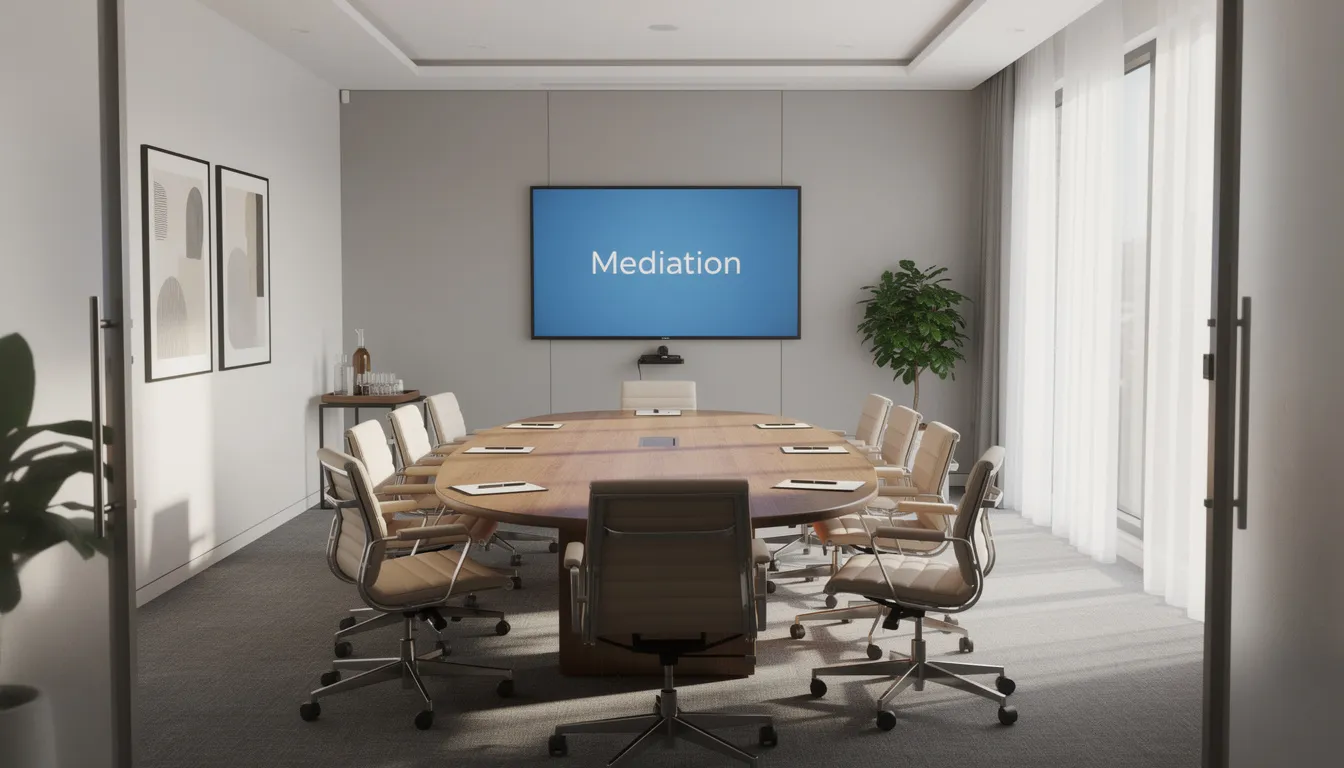
Key Takeaways: Why Mediation for California Trust & Estate Disputes?
Before diving into the details, here's what you need to know about why trust and estate mediation has become the preferred dispute resolution process for Southern California families:
Voluntary and confidential: Unlike public court proceedings, mediation discussions remain private and are protected under California Evidence Code Section 1119
Faster resolution: Most mediated disputes resolve in one to three sessions, compared to 12–18 months for San Diego Superior Court trials
Significantly lower costs: Mediation typically runs $5,000–$15,000 total (split among parties involved), while full trust litigation can exceed $100,000–$500,000 per side
Family control: Parties craft their own solutions rather than having a judge impose an outcome
Court-encouraged: Probate judges in San Diego County, Orange County, and Riverside frequently require mediation before trial, especially in trust contests and fiduciary breach cases
Free initial consultation: Andrew Gilliland offers complimentary consultations so you can understand the likely cost, timeline, and legal process before committing to mediation
What Is Trust and Estate Mediation in California?
Trust and estate mediation is a structured negotiation process led by a neutral mediator—often an experienced estate litigation attorney or retired judge—who helps all parties reach a written settlement regarding wills, trusts, and estate administration. The mediator facilitates communication and helps parties resolve disputes, but unlike a judge, does not issue rulings or make binding decisions.
Mediation sessions often take place at a neutral office in Carlsbad, downtown San Diego, or via Zoom, with parties typically in separate rooms while the mediator shuttles offers and counteroffers between them. This "shuttle diplomacy" approach allows each side to speak candidly about their concerns without face-to-face confrontation.
The mediator's role is to facilitate communication, reality-check expectations, and help craft creative solutions that probate court judges might not have the flexibility to impose. For example, a mediator can help structure a buyout of one sibling's interest in a family home over time—something a court judgment typically cannot accomplish.
When parties reach a mutually acceptable resolution, the mediated agreement can be formalized as a written settlement agreement and, when appropriate, submitted to the San Diego, Orange, or Riverside County Superior Court for approval and enforcement. These agreements become binding and enforceable like any court order.
If mediation does not resolve every issue, parties still retain the full right to pursue or continue litigation—mediation is a parallel option, not a waiver of legal rights.
What a typical California trust and estate mediation day looks like:
9:00 a.m.: Joint opening session for introductions, ground rules, and confidentiality agreements
9:30 a.m. – 12:00 p.m.: Private caucus sessions where the mediator meets separately with each party
12:00 – 1:00 p.m.: Working lunch (often continuing discussions)
1:00 – 4:00 p.m.: Continued negotiations with the mediator conveying offers, concerns, and potential compromises
4:00 – 5:00 p.m.: Drafting of settlement agreement if resolution is reached
Why Families Across Southern California Choose Mediation Over Litigation
Trust and estate disputes—such as disagreements over a parent's Carlsbad home, a Newport Beach rental property, or a Riverside investment portfolio—often become deeply emotional when litigated in open court. When siblings or other interested parties square off in a courtroom, every accusation becomes part of the public record. Relationships that might have survived a private negotiation are often destroyed by adversarial legal proceedings.
Mediation offers a confidential process where discussions remain private and solutions can be customized to the family's unique circumstances. Compare this with public court hearings in Vista, San Diego, or Riverside, where pleadings and testimony become permanent records accessible to anyone. In tight-knit Southern California communities, this publicity can damage reputations and relationships for generations.

Specific advantages for Southern California families:
Preserving family relationships: Particularly important in blended families common in San Diego and Orange County, where disagreements may involve a second spouse and adult children from prior marriages
Protecting real estate value: Many disputes involve Southern California real estate where a negotiated buyout can avoid forced sales at below-market prices
Faster distributions: Beneficiaries waiting on inheritance can receive funds months or years earlier than if the matter goes to trial
Tailored solutions: Mediation lets families tailor solutions that address unique circumstances—staged distributions, ongoing trust administration protocols, or caregiver compensation arrangements
Why Work with Andrew Gilliland for Trust & Estate Mediation?
Andrew Gilliland is the founding attorney of Gilliland Law in Carlsbad, with extensive experience in estate planning, probate, and mediation across San Diego, Orange, Riverside, and other California counties. His concentrated focus on trust and estate matters gives him a 360-degree perspective that benefits clients in mediation sessions.
Unlike mediators who only handle the negotiation side, Andrew drafts trusts and wills, administers probate estates, and represents clients in disputes involving trustees, executors, and beneficiaries. This comprehensive understanding of estate law means he can quickly identify practical solutions that address both legal requirements under the California Probate Code and family dynamics.
Andrew regularly appears in or works with cases arising in the Vista branch of San Diego County Superior Court, as well as Orange County and Riverside County probate courts. This familiarity with local probate law procedures and judicial expectations helps parties understand what might happen if their matter proceeded to trial—valuable perspective that often helps narrow gaps at the negotiation table.
His reputation for calm, even-handed communication makes all the difference in high-stress situations. Andrew translates complex tax and probate concepts into plain English for families who are grieving, frustrated, or simply exhausted by conflict.
Reasons families choose Andrew as their mediator or consulting attorney:
Decades of hands-on experience with California trust litigation and probate administration
Understanding of local laws and court professionals in San Diego, Orange, and Riverside counties
Ability to represent clients in both simple estates and complex estate disputes involving significant assets, coastal real estate, and closely held businesses
Track record of helping trust litigation attorneys and estate litigation lawyers find common ground for their clients
Flexible scheduling including in-person sessions in Carlsbad or virtual mediations statewide
Contact Gilliland Law at 760-237-0323 or message us online to learn whether Andrew can serve as mediator or as consulting attorney in your dispute.
The Trust & Estate Mediation Process at Gilliland Law
The mediation process at Gilliland Law follows a structured approach designed to maximize the chances of resolution while respecting each party's interests and legal responsibilities.
Step 1: Free Initial Consultation
The process begins with a complimentary consultation where Andrew reviews key documents—the trust, will, amendments, accountings, and prior correspondence between counsel or family members. This allows him to assess whether mediation is appropriate and provide realistic expectations about potential outcomes.
Step 2: Scheduling and Preparation
Once parties agree to mediate, the firm schedules a half-day or full-day session—often from 9:00 a.m. to 4:30 p.m.—either at the Carlsbad office, another neutral location in San Diego County, or via secure video conference. Parties are encouraged to exchange relevant financial records and prepare mediation briefs outlining their positions.
Step 3: The Mediation Day
Sessions typically follow a "shuttle diplomacy" format: each side occupies a separate room (or breakout room on Zoom), with Andrew moving between them to discuss goals, concerns, and proposals. This confidential process allows parties to speak frankly without escalating tensions through direct confrontation.
Step 4: Documentation
If an agreement is reached, Andrew or the attorneys for the parties will prepare a detailed written settlement agreement. When appropriate, this can be submitted to probate court as a stipulation so it can be entered as an enforceable order.
Step 5: Post-Mediation
Many trust disputes resolve in a single mediation day. However, more complex matters involving multiple properties, generations of beneficiaries, or business interests may require follow-up sessions to finalize terms. Partial resolutions are also valuable—they can narrow issues for any remaining court hearing, saving substantial time and money.
Summary of major stages:
Intake and document review during free consultation
Preparation of mediation briefs and document exchange
Full-day or half-day mediation session
Drafting of settlement agreement
Post-mediation court filings if probate filings are pending or court approval is required
Common Southern California Trust & Estate Disputes Resolved in Mediation
Mediation can address virtually any trust or estate dispute, from narrow interpretation questions to broad challenges involving the validity of an entire trust. Here are scenarios Andrew frequently helps resolve:
Trust and Will Challenges:
Challenges to a trust amendment signed late in life in San Diego or Orange County
Claims that a sibling or caregiver exerted undue influence over an aging parent
Disputes over whether a will was properly executed under California law
Allegations that the decedent lacked mental capacity when signing estate planning documents
Fiduciary Disputes:
Claims of breach of fiduciary duty by a trustee or executor
Disputes about whether a trustee in Riverside has properly accounted for rental income
Delayed distributions to beneficiaries waiting for their inheritance
Questions about investment decisions or estate management under the California Probate Code
Allegations of financial elder abuse by caregivers or family members with access to accounts
Asset Distribution Conflicts:
Disagreements over distribution of a Carlsbad home versus a Laguna Niguel vacation condo
Sibling resentment over caregiver compensation paid from estate assets
Conflicts over a step-parent remaining in the family residence
Disputes about how to divide investment portfolios or retirement accounts
Administrative Issues:
Interpretation of specific trust clauses affecting asset distribution
Selection, removal, or replacement of a trustee
Modification of administrative provisions to better fit current family circumstances
Disputes among co-trustees about probate administration decisions
California-Specific Issues that Affect Trust & Estate Mediation
California has unique legal requirements that significantly impact trust and estate disputes. Understanding these rules helps parties prepare effectively for mediation.
California's community property rules heavily influence disputes involving surviving spouses, particularly in long-term marriages with assets acquired in San Diego, Orange, or Riverside County. A mediator must understand how to characterize assets as community or separate property—a distinction that can shift millions of dollars between parties.
Key California legal considerations:
Statutes of limitation: Under Probate Code Section 16061.7, beneficiaries often have just 120 days (about four months) to contest a trust after receiving proper notice—delay can weaken a party's negotiating position dramatically
Elder abuse claims: Financial elder abuse allegations under California Welfare and Institutions Code Sections 15610.30 frequently arise in disputes over last-minute beneficiary changes or large transfers to caregivers
Local court procedures: The probate mediation program and settlement conferences in San Diego, Orange, and Riverside counties strongly encourage mediation before a contested trial date is confirmed
Community property: Assets acquired during marriage are presumptively community property, affecting how estates are divided when one spouse dies
Statute of limitations for common claims:
| Type of Claim | Typical Deadline |
|---|---|
| Trust contests (after proper notice) | 120 days |
| Creditor claims against estates | 1 year from death |
| Breach of fiduciary duty | 3 years (varies) |
| Financial elder abuse | 4 years (varies) |
California courts actively encourage alternative dispute resolution. Many probate judges in San Diego County will order mediation after initial hearings, making early voluntary mediation a strategic advantage—parties who mediate before court deadlines approach often negotiate from stronger positions.
Costs of Trust & Estate Mediation Versus Litigation
The financial comparison between mediation and litigation remains stark. While every case differs, understanding typical cost ranges helps families make informed decisions.
Mediation costs are usually predictable and shared among parties. A full-day mediation session in Southern California typically costs $5,000–$15,000 total, with the mediator's hourly rate ranging from $400–$800. Most matters require only one or two sessions to reach resolution.
Litigation costs escalate rapidly. Discovery alone in California probate matters can exceed $50,000 per side. A fully contested trust litigation case that proceeds through trial commonly costs $100,000–$500,000 per party in attorney's fees, expert witness costs, and court expenses—often consuming 25% or more of the estate assets at stake.
Cost comparison overview:
| Factor | Mediation | Litigation |
|---|---|---|
| Typical total cost | $5,000–$15,000 (split) | $100,000–$500,000+ per side |
| Timeline | 1 day to 2–3 sessions | 12–18 months to trial |
| Court appearances | None or minimal | Multiple hearings |
| Privacy | Confidential | Public record |
| Outcome control | Parties decide | Judge decides |
By resolving disputes earlier, families often preserve significantly more of the estate's value for beneficiaries. The math is straightforward: if siblings spend $200,000 fighting over a $400,000 estate, everyone loses—except the attorneys.
Gilliland Law aims to provide clear, upfront estimates of mediation fees and potential attorney's fees when representing an individual party in conjunction with mediation.

How to Prepare for a Southern California Trust & Estate Mediation
Proper preparation dramatically increases the likelihood of a successful mediation. Here's how to get ready:
Essential documents to gather:
Original trust and all amendments, including any pour-over will
Powers of attorney (financial and healthcare)
Prior accountings and inventory reports
Bank and brokerage statements covering the relevant time period
Deeds for properties in San Diego, Orange, or Riverside County
Business valuations or appraisals for closely held companies
Relevant emails, letters, or text messages between family members
Medical records if mental capacity or undue influence is at issue
Preparation steps:
Prepare a concise written timeline of key events—when the trust was created, when major amendments were signed, hospitalizations, or when a particular beneficiary began providing caregiving services
Think in advance about practical settlement options: buyouts of interests in a family home, staged distributions over time, or agreements about who will manage a family business or rental property
Speak with your own litigation attorney or financial advisor before mediation to understand best-case and worst-case outcomes if the matter proceeds to trial
Consider what you truly need versus what you simply want—flexibility on less critical issues often unlocks agreement on major concerns
Prepare emotionally for a long day of difficult conversations about sensitive family matters
Have questions about preparing for your mediation? Call 760-237-0323 or message us online to discuss your situation with Andrew Gilliland.
Avoiding Future Trust & Estate Disputes Through Planning
Many of the disputes Andrew mediates could have been minimized—or avoided entirely—through careful estate planning. Clear trust language, updated beneficiary designations, and well-documented decisions reduce ambiguity that fuels conflict.
Andrew's estate planning practice in Carlsbad helps clients across San Diego, Orange, and Riverside County design trusts that anticipate potential conflicts among children, blended families, and business co-owners. Preventive planning costs a fraction of what families spend resolving estate litigation cases.
Proactive steps to reduce future dispute risk:
Include clear, specific distribution language in trust documents rather than vague phrases open to interpretation
Update estate planning documents after major life events—marriages, divorces, births, deaths, or significant asset changes
Consider adding mediation clauses to trusts requiring beneficiaries to attempt mediation before filing trust litigation
Document the reasoning behind unusual distribution choices in a separate letter to family members
Name appropriate trustees or co-trustees who can work together rather than individuals likely to conflict
Hold periodic family meetings to discuss estate plans openly and address questions before they become grievances
Mediation can also be used proactively, before a loved one passes away, to clarify expectations about caregiving compensation, inheritance shares, and management of family businesses. These conversations are often easier with a neutral facilitator present.
Serving San Diego, Orange, and Riverside County—and Statewide
Although Gilliland Law is based in Carlsbad, the firm regularly assists clients in disputes arising throughout Southern California and beyond:
San Diego County locations served:
Carlsbad, Oceanside, Encinitas, Del Mar
San Diego (downtown and neighborhoods)
Vista, Escondido, San Marcos
Chula Vista, National City, El Cajon
Orange County locations served:
Newport Beach, Irvine, Laguna Niguel
Anaheim, Santa Ana, Huntington Beach
Costa Mesa, Mission Viejo, San Clemente
Riverside County locations served:
Temecula, Murrieta, Riverside
Palm Springs, Palm Desert, Corona
Many mediations now occur via Zoom, allowing family members who live outside Southern California—or even outside California—to participate effectively without traveling. Virtual mediation has proven equally effective for resolving trust disputes, and Andrew has conducted successful mediations with parties across the country.
Andrew can serve as a neutral mediator where appropriate, or as counsel to a single party seeking legal guidance through a mediation being conducted by another neutral. This flexibility allows him to assist clients in whatever role best serves their needs.
Frequently Asked Questions About Trust & Estate Mediation in Southern California
Is mediation mandatory before my trust dispute can go to trial in San Diego County?
California courts strongly encourage mediation, and many probate judges will order it after initial hearings. While not technically mandatory in all cases, courts in San Diego, Orange, and Riverside County often require parties to attempt settlement conferences or mediation before setting a contested trial date. Voluntarily mediating early often leads to better outcomes than waiting until the court orders it.
Can we mediate if a probate petition is already pending in Riverside or Orange County Superior Court?
Absolutely. Mediation can occur at any stage—before filing, early in litigation, or even on the courthouse steps. Many cases mediate successfully while litigation remains pending. If settlement is reached, the parties can submit their agreement to the court for approval, ending the litigation. Probate attorneys regularly recommend mediation even after substantial legal proceedings have begun.
Who typically pays for trust and estate mediation in California?
Parties commonly share mediator fees equally, regardless of how many people are on each "side." Each party also pays their own attorney's fees for representation during mediation. In some cases, the estate itself pays mediation costs if all parties agree and court approval is obtained. This fee-sharing structure keeps costs manageable compared to each side bearing full litigation expenses.
What if we only resolve some of our issues at mediation?
Partial settlements are common and valuable. You might reach agreement on who will serve as successor trustee while leaving asset distribution questions for the court. Narrowing the issues substantially reduces trial time, legal fees, and emotional strain. Estate litigation attorneys often report that partial resolutions also shift momentum toward full settlement as parties see progress.
Can I bring my own attorney to mediation with Andrew Gilliland?
Yes. Parties are welcome to bring their own probate attorneys or estate litigation lawyers to mediation. Andrew is comfortable working alongside both represented and unrepresented parties, subject to ethical requirements. If you don't have an attorney, Andrew can explain your options during an initial consultation and discuss whether you should consider obtaining legal representation for the mediation.
How is mediation different from arbitration?
In mediation, the neutral facilitator helps parties negotiate their own agreement—nothing is binding until parties sign a settlement. In arbitration, the neutral makes a decision that is typically binding and enforceable like a court judgment. Mediation preserves party control over outcomes, while arbitration essentially substitutes a private judge for the public court system.
Contact Gilliland Law for Trust & Estate Mediation in Southern California
If you're facing a dispute over a parent's trust, executor actions, or estate administration in San Diego, Orange, or Riverside County, reaching out early—before positions harden and litigation costs escalate—can make all the difference.
Gilliland Law offers a free, confidential initial consultation to review your documents, explain your options, and discuss whether mediation is appropriate for your specific situation. You'll get honest legal guidance about whether your case is suited for mediation and what outcomes you might realistically expect.
Take the next step toward resolution:
Call 760-237-0323 to speak directly with Gilliland Law about your trust or estate dispute
Message us online through the firm's contact form for a confidential response
Request a virtual consultation if you live outside the Carlsbad area or prefer to meet via Zoom
All inquiries are confidential. Contacting the firm does not obligate you to proceed with mediation or litigation—it's simply a conversation about your options.
Trust and estate mediation with Andrew Gilliland offers a practical, respectful path to resolving Southern California trust and estate disputes while preserving as much of the estate—and the family relationships—as possible.
Don't let estate issues drain your inheritance or damage your family permanently. Call 760-237-0323 or message us online today to schedule your free consultation.